
Introduction: quick take and who should keep reading
Quick take: If you’re curious whether magnesium l‑threonate can help with memory and faster thinking, Neuro‑Mag is worth a cautious trial in — but don’t expect overnight results.
This review covers the product overview (specs), the science behind how the ingredient is supposed to work, a synthesis of verified customer feedback, step‑by‑step dosing guidance, and a price/value breakdown so you can decide whether to test one bottle.
By the end you’ll know what to check on the label, how to run a practical 6–8 week trial, and which user types are most likely to benefit.

This image is property of Amazon.com.

Product overview — what's in the bottle (specs you must know)
What the label says: this product is sold as 90 vegetarian capsules and the formulation wording on the packaging highlights Memory Health, Quick Thinking, Cognitive Health Support.
The capsules are explicitly described as vegetarian, and the product title is the source for the label claims summarized above.
Packaging and buyer expectations: shoppers typically expect a month‑to‑three‑month supply depending on serving size, a single active ingredient focus (magnesium L‑threonate) rather than a multi‑ingredient stack, and vegetarian capsule delivery for dietary preference compatibility.
How magnesium l-threonate works: the science behind Neuro-Mag
Mechanism in plain terms: magnesium L‑threonate is proposed to increase magnesium levels inside brain cells more effectively than some other magnesium forms, supporting synaptic function and plasticity that underlie learning and memory.
The available evidence includes animal studies showing improved learning behavior and enhanced synaptic density in rodent models, plus a limited number of small human trials that measured modest cognitive improvements over several weeks.
Concrete study takeaways and realistic expectations:
- Animal work reports increased hippocampal magnesium and improved performance on memory tasks in rodents, supporting a plausible biological mechanism.
- Small human trials have observed modest gains in working memory or composite cognitive scores after several weeks of supplementation, but sample sizes are limited.
- Clinical relevance is tentative: results suggest potential benefit for specific cognitive domains, not guaranteed broad improvements for everyone.
In short, the mechanism matters because increasing brain‑cell magnesium is a direct biological route to supporting synaptic function, but human evidence remains preliminary and outcomes are modest and gradual.

Key features deep-dive (ingredients, formulation, and practical effects)
Active-ingredient focus: the title and label emphasis center on magnesium L‑threonate as the primary active compound; supporting ingredients are not highlighted in the product name, so check the supplement facts panel for excipients or capsule materials.
What each component is supposed to do: magnesium L‑threonate — deliver bioavailable magnesium to the brain to support synaptic signaling; vegetarian capsule — provide a non‑animal delivery form for those who avoid gelatin.
Expected effect timeline: users and trials typically report that any cognitive changes appear gradually, over several weeks rather than days; short‑term alerting effects are unlikely because this is not a stimulant‑based product.
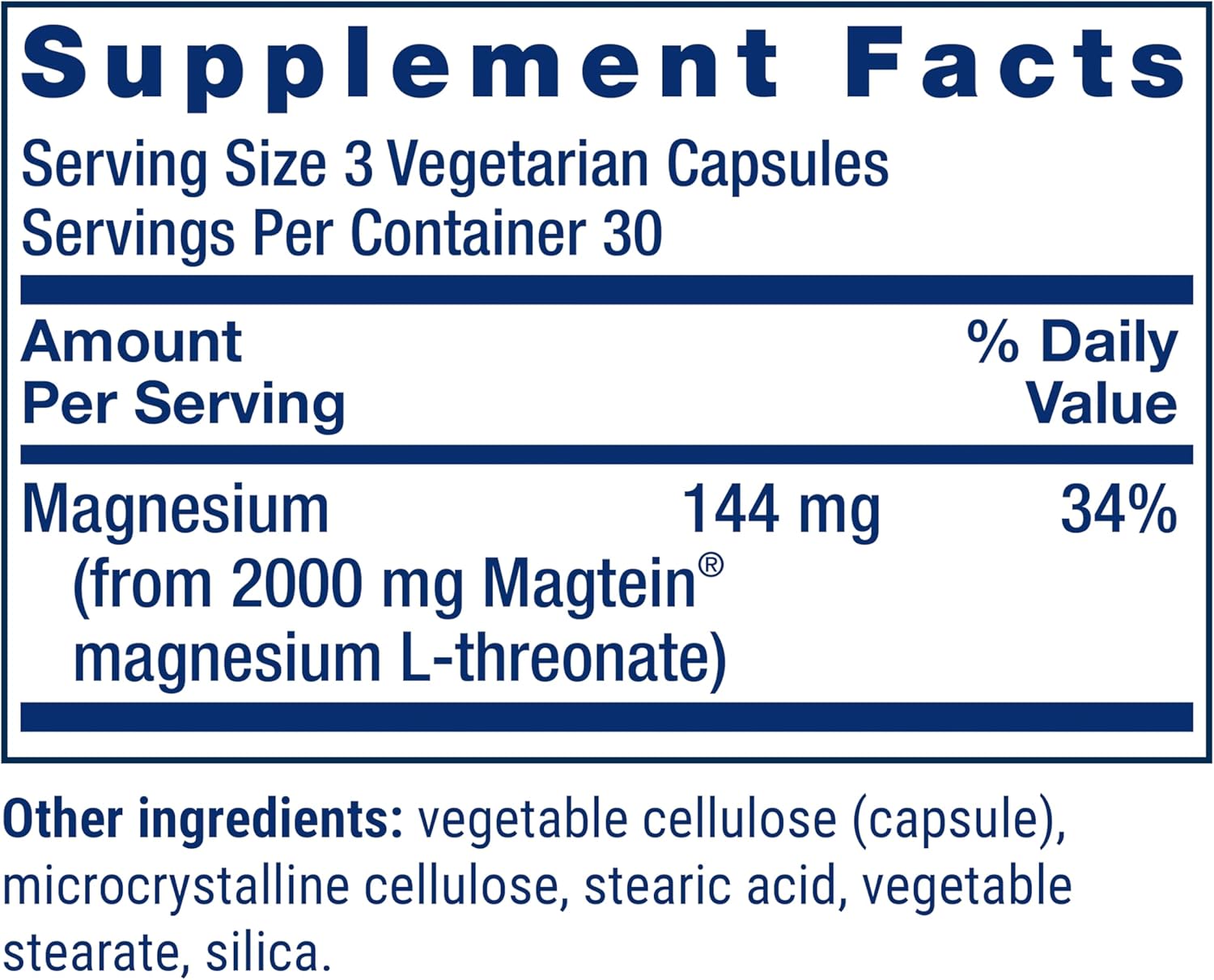
Label checks and comparison checklist: before buying, look at three things on the supplement facts panel to compare this bottle to others.
- Elemental magnesium per serving: confirm how much actual magnesium is provided (not just compound weight).
- Serving size: note how many capsules constitute one serving so you can calculate dose and cost per serving.
- Third‑party testing marks: scan for independent testing seals or GMP statements to assess manufacturing quality.
magnesium l-threonate dosing and absorption
How to pick an appropriate dose from the label (step‑by‑step):
- Find serving size: read the supplement facts to see how many capsules equals one serving.
- Calculate elemental magnesium: note the listed amount of elemental magnesium per serving (labels often show compound weight plus elemental Mg).
- Compare to clinical doses: look up the clinical trial dose ranges for magnesium L‑threonate and compare — aim to match the study‑level dosing if you’re conducting a trial.
Absorption and timing: magnesium L‑threonate is designed to improve brain uptake; however, absorption from the gut can be affected by food. Some people tolerate it better with meals, while others take it between meals to avoid competition with calcium or iron for absorption.
Two common dosing strategies users report:
- Single morning dose: convenient for adherence and avoids possible sleepiness for those who find magnesium calming.
- Split dose (morning + evening): used to reduce GI side effects and maintain more consistent blood levels across the day.
Safety checkpoints: the commonly cited tolerable upper limit for supplemental magnesium (elemental) is often referenced around mg/day for adults from supplements — keep within recommended ranges, watch for loose stools, and consult a clinician if you have kidney impairment or complex medication regimens.
This image is property of Amazon.com.
What Customers Are Saying — synthesize verified feedback and patterns
Overall response patterns: verified buyers report a mixed picture: many describe subtle improvements in short‑term recall or focus, while a sizable minority notice no change.
Three common customer‑derived patterns and implications:
- Slow onset: many buyers mention that effects are gradual; several say they noticed subtle differences after about 4–8 weeks, so patience is required.
- Variable responder rate: responses vary — some shoppers feel clearer thinking and better recall, others report no perceptible benefit; this suggests individual baseline magnesium status or other factors influence outcomes.
- Tolerability: reports of mild digestive upset or loose stools appear across reviews but are generally described as transient and manageable by adjusting dose or timing.
Actionable takeaway: judge whether Neuro‑Mag is working by keeping a short baseline checklist of memory tasks, running a focused trial at the label dose for several weeks, and logging specific cognitive tasks weekly so you have objective before/after data.
Who this supplement is for (and who should skip it)
Buyer personas who may consider Neuro‑Mag:
- Older adults concerned about age‑related forgetfulness seeking targeted magnesium support for synaptic health.
- Students or professionals wanting sharper recall and steadier working memory rather than stimulant‑style focus.
- People with low dietary magnesium or dietary restrictions that limit magnesium‑rich foods.
Three situations requiring clinician input:
- If you have chronic kidney disease or reduced kidney function.
- If you take medications that affect magnesium levels (for example diuretics or certain heart medications).
- If you are pregnant or breastfeeding.
Decision flow — three steps to decide:
- Assess baseline magnesium intake: tally dietary magnesium and other supplements you take.
- Set a focused trial: plan a single‑bottle trial (follow the step‑by‑step regimen in the How to Use section).
- Evaluate measurable tasks: compare your weekly logs of memory tasks and work output to baseline to decide whether to continue.

This image is property of Amazon.com.
Comparison: Neuro-Mag vs. similar brain supplements on Amazon
Products compared: Neuro‑Mag (magnesium L‑threonate) versus NEURIVA Plus and Onnit Alpha Brain.
Comparison criteria:
- Ingredient specificity: Neuro‑Mag focuses on a single, targeted compound; NEURIVA Plus and Onnit Alpha Brain are multi‑ingredient blends combining herbs, vitamins, and other nootropics.
- Strength of clinical evidence: magnesium L‑threonate has a plausible mechanism with animal data and small human trials; multi‑ingredient blends may show short‑term alertness in user reports but often lack the same focused mechanistic trials.
- Price‑per‑dose considerations: single‑ingredient products let you judge one mechanism at a time; stacks may feel more immediately noticeable but complicate assessing which ingredient is helping.
Actionable recommendation: choose Neuro‑Mag if you want a targeted approach aimed at memory biology; pick a multi‑ingredient stack if you need quick, short‑term focus and are comfortable with blended formulations.
Price & value: is $28.32 worth it? (cost-per-serving and availability)
Current price and availability: Current price $28.32 (Original $31.50) — Availability: In Stock. This information is stated here once as the purchasing snapshot.
Cost analysis: with capsules in the bottle, the cost per capsule is approximately $0.31 per capsule (calculated as $28.32 ÷ ≈ $0.31 per capsule).
Worked example for cost‑per‑serving: if the label’s serving size is two capsules, multiply the per‑capsule cost by two: × $0.31 ≈ $0.62 per serving. Check the serving size on the label to convert this bottle price into your actual cost per daily serving.
Value assessment: weighing the per‑serving cost against the modest but plausible evidence base and the realistic 6–12 week outcome timeline, the price is reasonable for a targeted test. Buying one bottle to test before committing to a multi‑bottle purchase is the pragmatic buying tip.
This image is property of Amazon.com.
Side effects, interactions, and safety checklist
Common side effects: magnesium supplements frequently cause mild GI upset and loose stools in some people; these effects are usually dose‑related and reversible by lowering dose or splitting doses.
Less common but important safety flags: impaired kidney function can cause magnesium accumulation, and magnesium can interact with certain medications that alter electrolyte balance or renal handling.
4‑step safety checklist:
- Verify medications and conditions with a clinician before starting.
- Start at the label dose and avoid doubling up with other magnesium supplements.
- Monitor bowel habits and adjust timing or split the dose if needed.
- Stop and consult your clinician if you experience significant adverse symptoms such as severe GI distress or muscle weakness.
Monitoring plan: log sleep, digestion, and cognition weekly; use objective memory tasks as your baseline and re‑test after your planned trial. If you see no improvement and experience tolerability issues, stop and seek medical advice.
How to use it: step-by-step plan for a 6–8 week trial
Numbered regimen for a practical trial:
- Day 1–7: establish objective baseline scores for a few simple memory tasks (e.g., timed word‑recall, digit span) and begin the label dose while recording any side effects.
- Week 2–4: track small cognitive tasks weekly and note subjective changes in focus or recall; adjust timing (with food vs. between meals) if you experience mild GI upset.
- Week 5–8: compare your logged performance to baseline and evaluate side effects; decide whether to continue, adjust dose, or stop.
Practical tips: take with food if you get GI upset, avoid taking other magnesium supplements while testing this product, and consider taking it earlier in the day if you find magnesium makes you more relaxed before sleep.
Troubleshooting (3 responses):
- No effect after weeks: stop or try a different product type (for example a multi‑ingredient stack) while noting that individual response varies.
- Mild GI upset: split the dose into two smaller doses or take with a meal.
- Serious symptoms: stop immediately and consult your clinician.
This image is property of Amazon.com.
Buying tips and final considerations before you click buy
When to buy: shop for cyclical discounts and start with a single‑bottle trial so you can judge effects within your trial window.
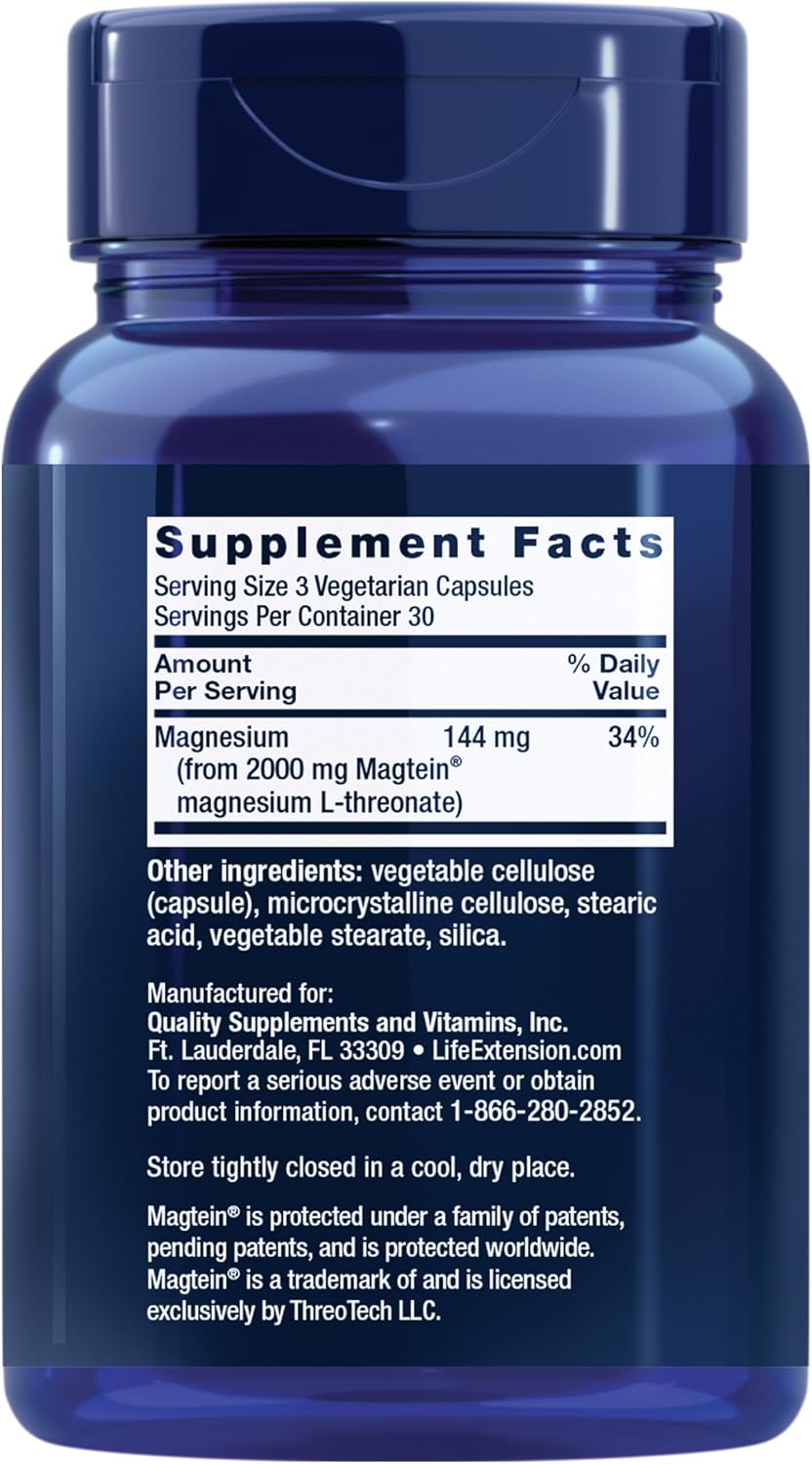
Packaging and storage: store the bottle in a cool, dry place away from sunlight and moisture to preserve potency; verify the capsule vegetarian claim on the label at checkout.
Label claims to verify: check the supplement facts for elemental magnesium per serving, serving size, and any third‑party testing seals you value; these are the most actionable checkout checks.
Return and refund expectations: keep the typical 6–8 week trial period in mind — short return windows may not fully capture whether the product helps you, so prefer sellers with flexible return terms if you’re risk‑averse.
Summary of this review’s structure: this article covered the product overview, the science behind magnesium L‑threonate, what customers report, step‑by‑step dosing, and a clear price/value judgment to help you decide whether to run a focused trial.
Pros and Cons
Pros
- Targets a single, plausible mechanism for cognitive support (magnesium transport to the brain)
- Vegetarian capsule format suitable for non‑animal diets
- Focused formulation avoids extra stimulants or unnecessary ingredients
Cons
- Evidence from human trials is limited and effects appear modest for many users
- Benefits can take weeks to appear, so it’s not suitable for immediate short‑term boosts
- Some users report mild gastrointestinal upset or loose stools
Final Verdict
Key Takeaways
- Magnesium L‑threonate targets brain magnesium uptake and has plausible mechanistic support but limited human trial data.
- Check the label for elemental magnesium, serving size, and testing marks before buying and run a single‑bottle trial.
- Expect gradual effects over several weeks; log objective memory tasks to judge benefit.
Frequently Asked Questions
What is the best supplement for memory and cognitive function?
There’s no single “best” supplement for everyone. For targeted brain magnesium support, magnesium l-threonate is the focused option; multi-ingredient nootropics aim at short-term focus and energy. Match your choice to your goal: long-term memory support favors magnesium L‑threonate, while short-term alertness often uses multi-ingredient stacks.
What is the most powerful cognitive enhancer?
The most powerful cognitive enhancer depends on what you mean by “powerful.” Prescription agents used under medical supervision can produce strong acute effects. Among over‑the‑counter supplements, multi-ingredient nootropic stacks often deliver noticeable short-term focus, but single-ingredient compounds like magnesium L‑threonate target memory-related biology and have a more specific mechanism.
Do brain and memory supplements actually work?
Some brain and memory supplements produce modest, measurable benefits for certain people, especially when a specific nutritional gap exists. Research is stronger for a few targeted ingredients (including magnesium L‑threonate) than for many broad “brain blends,” but results vary and effects are typically gradual over weeks.
What drinks are brain boosters?
Hydration, plain green tea, and coffee are mild, widely available brain boosters; green tea supplies L‑theanine plus caffeine, and coffee delivers caffeine for alertness. Other drinks with omega‑3s or polyphenols (like certain fortified smoothies) may support cognition indirectly over time.
Disclosure: As an Amazon Associate, I earn from qualifying purchases.